Healthcare operations support for practices nationwide

Practical support for practices that need cleaner operations, better follow-through, and less administrative drag.

AdvanceAPractice helps therapy groups, psychiatry teams, PMHNP practices, outpatient medical organizations, and growing private practices improve billing, credentialing, workflow, implementation, and practical AI systems without forcing unnecessary system replacement.

The work is grounded in healthcare operations. It is designed to help practices start well, grow with more structure, manage the day-to-day more cleanly, and expand without creating avoidable friction.

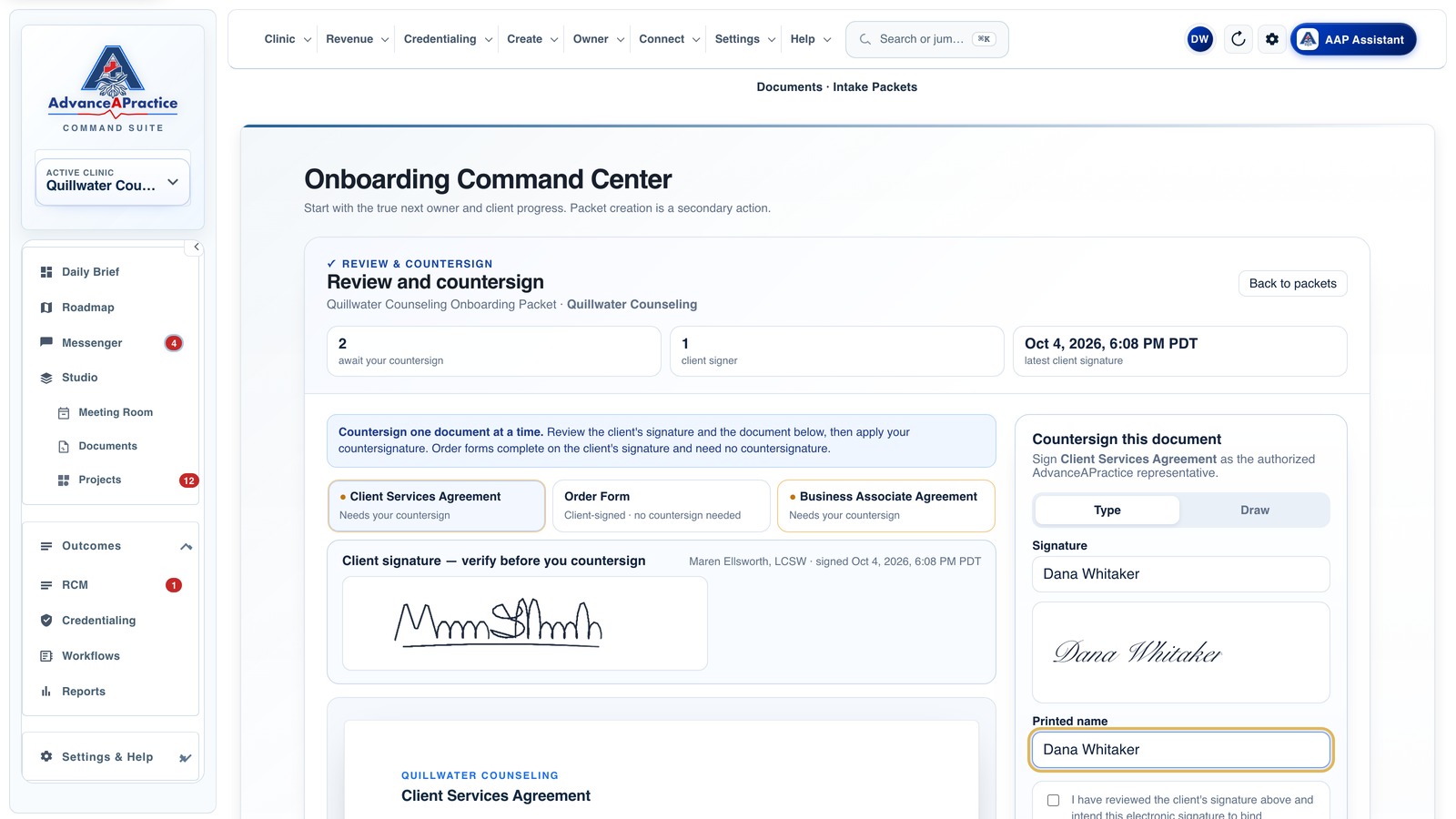
Healthcare operations and workflow illustration

Practical support for the back office

Built for practices that need the back office to stay organized.

  • Cleaner billing, credentialing, and workflow follow-through
  • EHR-agnostic support where workable
  • Implementation help that keeps operations readable
  • Less clutter on the homepage, more clarity on the next step
Start The Conversation

Tell us what needs attention first.

Use the short form to flag the service line, the practice location, and the main operational bottleneck. AdvanceAPractice will review it and follow up directly.

  • Mental health billing, medical billing, credentialing, documentation, and workflow support
  • Short intake for owners, operators, and healthcare decision-makers
  • Do not include patient PHI in your first message
Open Full Contact Page
EHR-agnostic where workable

Built to help current systems work better before anyone talks about replacing them.

Practical AI, not reckless automation

Human review, workflow controls, and operational judgment stay in the loop.

Remote-first with in-person support when needed

Built to work well for practices across the United States.

Built for behavioral health and broader outpatient care

Strong specialty credibility for therapy, psychiatry, PMHNP, and medical practice workflows.

Operations-aware and revenue-aware

Billing, documentation, credentialing, and workflow design are treated as connected systems.

Where Practices Usually Get Stuck

Where billing, documentation, credentialing, and admin workflows usually break down.

The most expensive problems are rarely isolated. They usually show up as after-hours charting, admin overload, intake bottlenecks, broken handoffs, denial follow-through gaps, credentialing drag, poor visibility, and outdated processes that force teams to work around their own systems.

Documentation is draining provider time

After-hours charting, inconsistent templates, and unclear review expectations create friction for clinicians and operations teams alike.

Revenue cycle visibility is weak

Claims aging, denial patterns, intake mistakes, and inconsistent follow-through make it hard to see what is costing the practice revenue.

Credentialing slows growth

Provider onboarding gets delayed when document collection, payer enrollment, reminders, and status visibility are handled in a fragmented way.

Four Practice Stages

Support that matches the way practices actually grow.

Starting a practice

Set up workflows, payer readiness, billing structure, and administrative foundations before avoidable problems start compounding.

Growing a practice

Reduce owner-dependent processes, tighten documentation and billing consistency, and build systems that can support more volume.

Managing a practice

Improve daily operations, team handoffs, visibility, and follow-through so the practice runs with less friction.

Expanding a practice

Support new providers, new services, and larger workflows with credentialing, implementation, and more durable operating systems.

What Improves

What AdvanceAPractice helps improve across the practice.

Documentation

Reduce note burden, improve template consistency, support review controls, and help providers finish documentation with less drag.

Operations

Clean up intake, scheduling, onboarding, admin handoffs, task visibility, and staff adoption so current systems become easier to run.

Revenue

Strengthen billing follow-through, denial visibility, A/R discipline, credentialing coordination, and intake-to-claim reliability.

Core Services

Six focused service lines built around how practices actually run.

Each service is clear enough to stand on its own. The bigger advantage comes from how these service lines work together across documentation, operations, billing, credentialing, and workflow implementation.

AI Documentation

Documentation workflow improvement for providers and teams that need less charting friction and better consistency.

  • Reduce after-hours charting pressure
  • Improve template and review consistency
  • Support rollout and staff adoption

AI Revenue Cycle

Practical revenue-cycle workflow support that improves visibility, accountability, and follow-through without fake autonomous billing hype.

  • Find intake-to-claim bottlenecks
  • Support denials and KPI visibility
  • Use automation where it actually helps

Credentialing

Organized provider onboarding, payer setup, reminders, tracking, and follow-through for growing practices.

  • Document collection and status visibility
  • CAQH and payer enrollment support
  • Cleaner onboarding workflows

Consulting

Practice automation consulting for healthcare teams that want cleaner workflows, better visibility, and stronger implementation support.

  • Workflow mapping and automation planning
  • KPI visibility and dashboard planning
  • Rollout and adoption support

Mental Health Billing

Premium behavioral-health billing support for therapy, psychiatry, PMHNP, counseling, and group practice operations.

  • Behavioral health billing workflow support
  • Denials and follow-through visibility
  • Operations-aware reimbursement cleanup

Medical Billing

Outpatient medical billing support for practices that need cleaner claim flow, stronger A/R discipline, and more consistent operations.

  • Medical billing workflow consistency
  • Denial and aging A/R support
  • Revenue-aware operational cleanup
How We Work

How the work gets implemented.

AdvanceAPractice is built around structured implementation, not vague recommendations. The work starts with the current workflow, then moves into the right level of design, rollout, and follow-through.

Readiness Review

Clarify the current systems, bottlenecks, staffing reality, and service priorities before making recommendations.

Workflow Plan

Map the points where documentation, billing, credentialing, and operations need redesign or tighter handoffs.

Implement

Support rollout inside the practice’s real operating environment, with attention to systems fit, staff use, and follow-through.

Optimize and Expand

Strengthen visibility, improve reporting, reduce friction, and help the practice scale on cleaner operational foundations.

Why AdvanceAPractice

Why practices choose AdvanceAPractice over generic billing or vague automation.

AdvanceAPractice sits in the middle of three things most firms split apart: healthcare operations understanding, revenue awareness, and practical AI implementation. That makes the support more useful than generic consulting and more credible than a faceless software pitch.

Operations-first mindset

Workflow design, staffing reality, and handoffs matter as much as software features.

Revenue-aware thinking

Billing, denials, onboarding, and follow-through are treated as connected operational systems.

EHR-agnostic approach

The goal is to help current systems work better where workable, not create unnecessary disruption.

Practical AI and adoption support

Automation is implemented with review controls, rollout support, and realistic staff use in mind.

Best-Fit Practices

Best-fit practices and teams.

Therapy, counseling, and psychotherapy groups

Practices that need mental health billing services, documentation relief, cleaner intake flow, and better operational follow-through.

Psychiatry and PMHNP practices

Teams that need better billing visibility, stronger onboarding, and more structured provider workflows as they grow.

Outpatient medical and multi-provider practices

Organizations that want smarter workflows, stronger claim flow, and operational support without replacing everything.

Proof

What healthcare practices say.

AdvanceAPractice has provided a great benefit to my growing practice and I strongly recommend their services. They were able to clearly explain the confusing insurance billing process and helped me create a plan to expand my business.

John Benson, PMHNP-BC

Ryan’s unique ability to have executive and business-like vision as well as possess the details of daily operations has been and continues to be crucial in delivering, serving, and supporting our patients, employees, and contractors.

Tim Perez, PMHNP-BC

Resources

Resources and insights that build operational clarity.

The resources hub is designed to support real decision-making around billing, credentialing, workflow improvement, practical AI, and EHR-adjacent operations.

Category

AI & Workflow

Guidance on implementation, practical automation, adoption, and helping current systems work better.

FAQ

Common questions about practical AI, billing, and implementation support.

We already have an EHR. Is this still relevant?

Yes. AdvanceAPractice is designed to help practices get more out of current systems where workable, not force unnecessary replacement.

We are worried about AI risk. How do you approach that?

The approach is practical, controlled, and implementation-aware. Review steps, workflow discipline, and human judgment remain central.

Are you only a fit for large practices?

No. Even one or two better workflows can materially reduce friction for a smaller practice, especially when billing, credentialing, or documentation burden is hitting the owner directly.

What if we are already too busy to take on another project?

That is exactly why the engagement model is structured around readiness, support, and follow-through instead of dropping a strategy memo and disappearing.

Next Step

Talk through your current bottlenecks, systems, and growth priorities.

If the practice is dealing with documentation burden, denial-heavy workflows, credentialing drag, or operational overload, the next step is a structured conversation about what should improve first.